
Harding Icefield Trail With Kids: Our Family Hiking Guide to Seward, Alaska


If you’re looking for one unforgettable hike in Seward, Alaska, the Harding Icefield Trail is hard to beat.
It climbs from the dense forests surrounding Exit Glacier into alpine meadows, above the treeline, and eventually to an overlook of the enormous Harding Icefield in Kenai Fjords National Park.
It is also steep.
Really steep.

The full Harding Icefield Trail is approximately 7.8 miles round trip with more than 3,100 feet of vertical gain, and the National Park Service describes it as a strenuous hike. AllTrails says it is a hard, 9 mile out and back with 3,297 feet of elevation gain. I'm assuming the discrepancy is the NPS starts the trail at the register, while AllTrails starts it at the Nature Center, which is the true start. Every step counts right? Either way.. it's no joke.
Naturally, we decided to attempt it with four children (10 yrs, 8 yrs, 5 yrs, and a 3 yr old in a toddler carrier)!
And while we didn’t hike every step to the official end of the trail, we made it just beyond Top of Cliffs, climbing roughly 2,300 vertical feet with our kids before turning around.
It became one of our favorite days in Seward — and one of those experiences that reminded us why we keep bringing our kids along for the hard things.


Harding Icefield Trail Quick Facts
Before you hike Harding Icefield Trail with kids, here’s what to know:
Location: Kenai Fjords National Park near Seward, Alaska
Trailhead: Exit Glacier Area
Full distance: About 8 miles 12.8 km) round trip from the Harding Icefield Trail register, not including the mile or so hike to the register or the trails to Glacier View to see it from the river.
Elevation gain: About 3,300 feet (1005 m)
Difficulty: Strenuous (in the winter AllTrails considers this a technical mountaineering hike, not recommended for novice hikers and you need special gear to attempt it. In the summer though, It's totally doable. I do recommend some gear though to make it less stressful. Read on..)
Time for the full hike: Plan roughly 6–8 hours or longer if your tiny hikers are a bit slower. Start early! Don't get caught in the dark!!
Marmot Meadows: About 1.5 miles one way
Top of Cliffs: About 2.3 miles one way
Harding Icefield viewpoint: About 3.9 miles one way
Dogs: Not allowed on park trails.
Facilities on trail: No restrooms or potable water once you leave the visitor area
The National Park Service notes that hikers gain roughly 1,000 feet of elevation per mile, which gives you a pretty good idea of what you are getting yourself into. Legs will be ON FIRE!

This is not a casual family nature walk. But you also don't have to hike the entire trail to experience it.
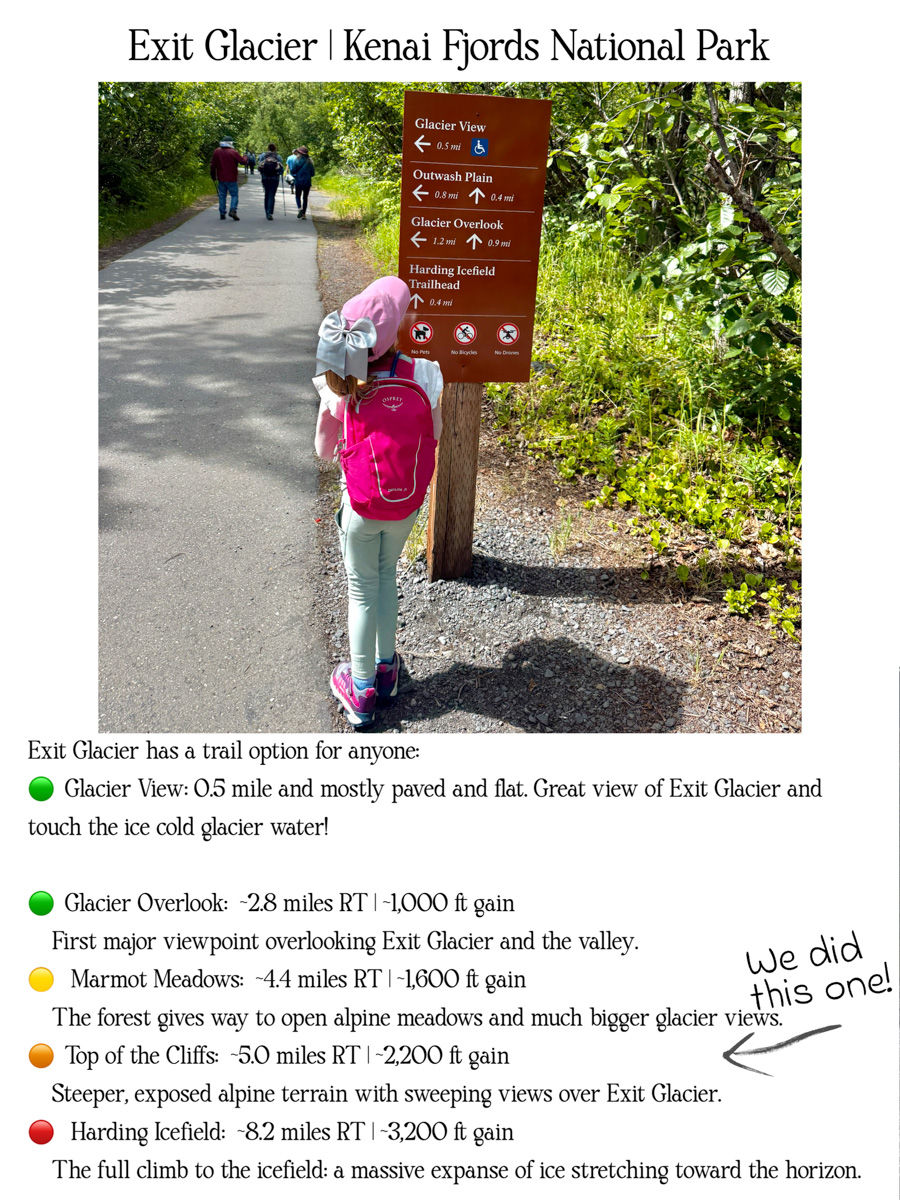
If you're looking for a shorter walk, after checking out the Exit Glacier Nature Center, take the 0.5 mile (0.8 km) down the paved, flat Glacier View trail to the river. You can get an excellent view of the glacier and a great photo op! The kids loved touching the icy water. It's also has heavy tourist traffic, so the likelihood of bears is much lower. We ate our lunch on the rocks here before hiking up.

That is one of the reasons I think Harding can still be a fantastic hike for adventurous families. It can meet you at whatever level your family is at:
Where Is the Harding Icefield Trail?

The Harding Icefield Trail is located in the Exit Glacier Area of Kenai Fjords National Park, just outside Seward, Alaska.
From Seward, you follow Exit Glacier Road to the park's visitor area.
The trail begins along the same network of paths leading toward Exit Glacier before splitting off and beginning its climb toward the Harding Icefield.
There is something almost deceptive about the beginning.
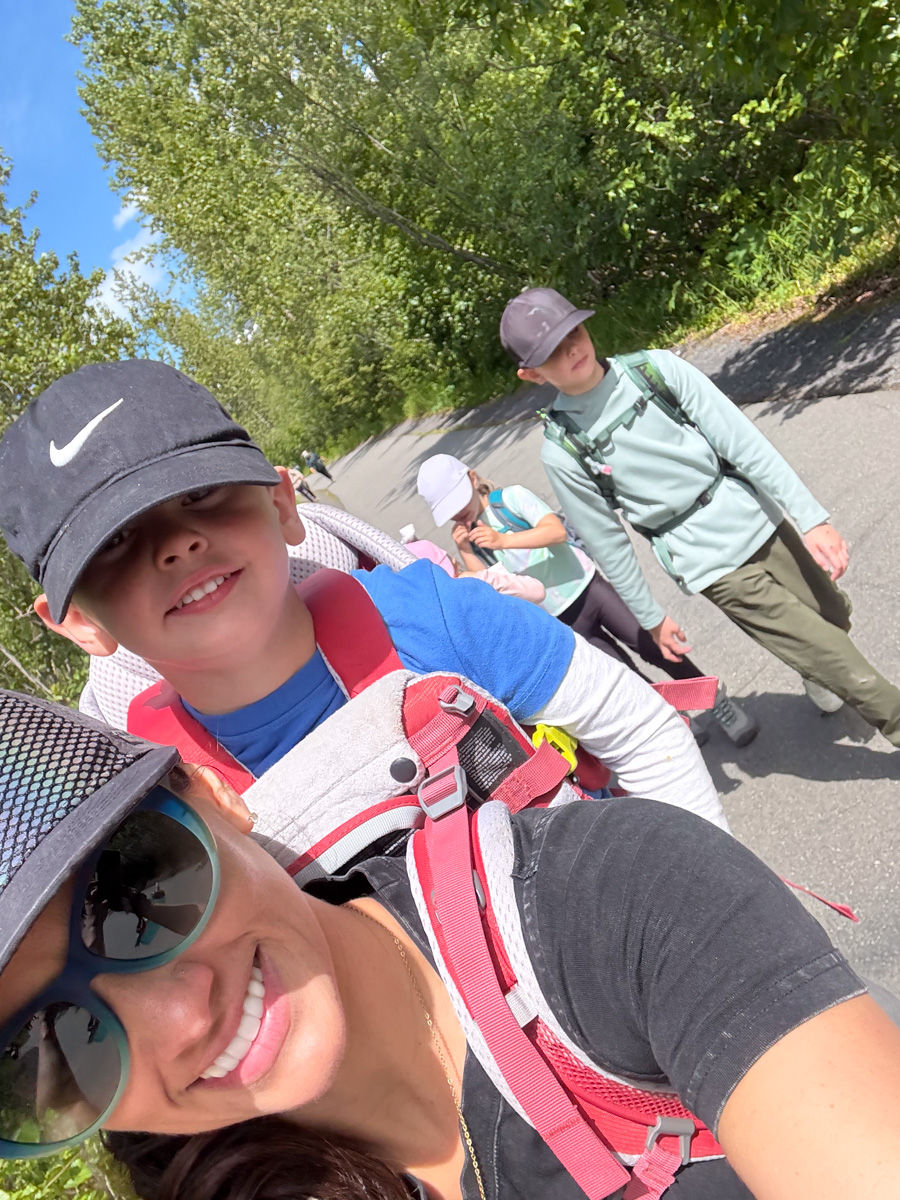
You're walking through a beautiful forest.
Freya found a heart rock! This is the beginning of the trail. Nice and wide, flat and partially paved in sections. The kids spotted strange markings on a tree. We think it could have been a bear? What do you think?
The trail feels manageable.
Exit Glacier is somewhere in sight.
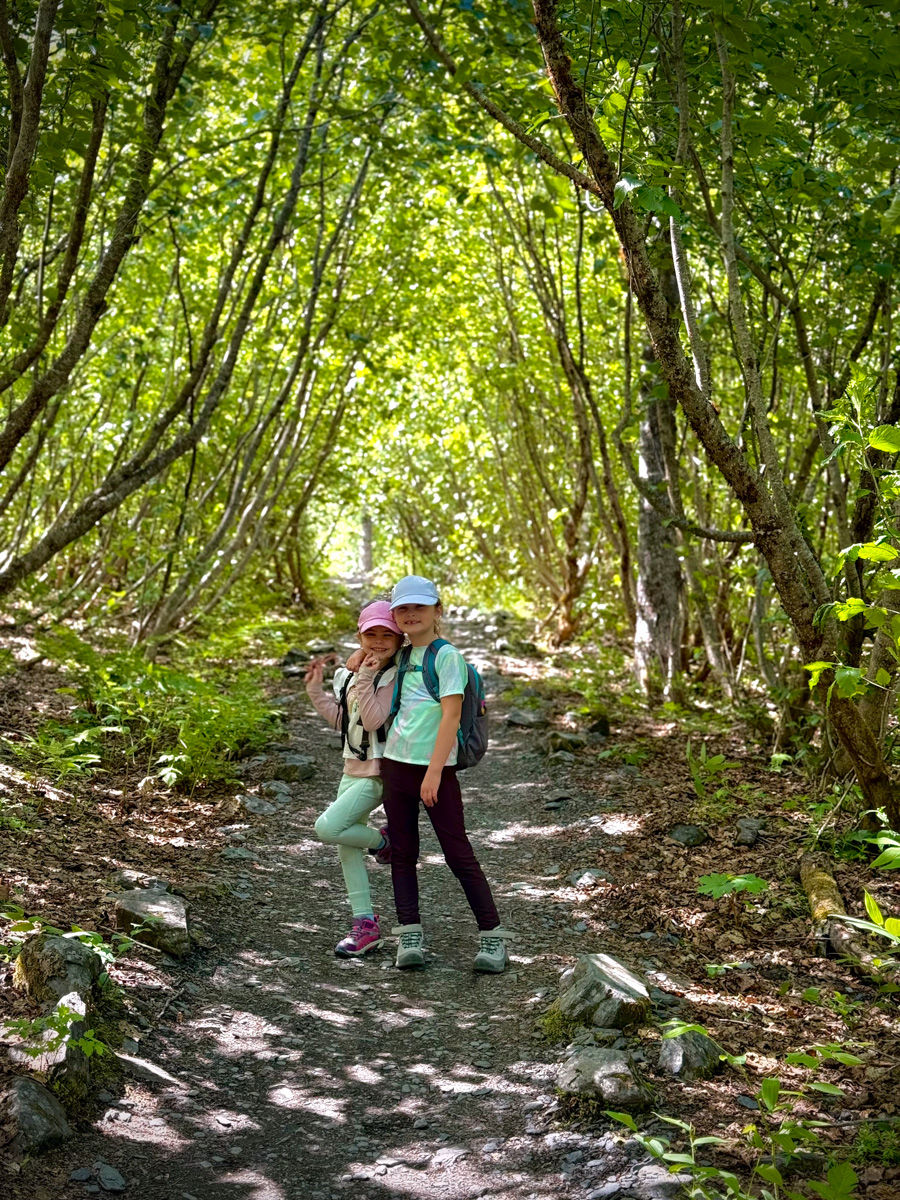

And then Harding starts climbing.

And climbing.
And climbing.
Can Kids Hike the Harding Icefield Trail?
Yes — some kids can absolutely hike portions of the Harding Icefield Trail.
But I wouldn't make reaching the end of the trail the definition of success.
That distinction matters.
Harding is an out-and-back trail with several natural turnaround points, which means families can choose a destination based on their children's hiking ability, weather conditions and how everyone is doing that particular day.
For us, that was perfect.
We went into the hike knowing that our ultimate destination would be decided somewhere on the mountain.
Our kids hike somewhat regularly, but usually not this amount of vertical.
They understand that hiking involves climbing, being uncomfortable occasionally, and continuing even when your legs are tired.
But they're still kids.
We weren't interested in forcing everyone to the end simply so we could say we completed the Harding Icefield Trail.
Instead, we treated the mountain almost like several hikes stacked on top of each other.
And that completely changed the experience.
The Best Harding Icefield Trail Turnaround Points for Families
There are several places along Harding where you can stop, enjoy an incredible view and head back down.
For families hiking with kids, these are the landmarks I would keep in mind.
Glacier Overlook
The first goal doesn't even require reaching the upper mountain.
As you climb through the forest near Exit Glacier, you begin getting views of the glacier from above.
And that alone is worth experiencing.
From the valley floor, Exit Glacier already looks enormous.
But gaining elevation begins changing your perspective.
You can see how the glacier sits inside the valley and how the surrounding mountains were shaped by ice.
For younger children or families that simply want a shorter adventure, you do not have to reach Harding Icefield to have a meaningful experience here.

Marmot Meadows
Around 1.5 miles from the Harding Icefield Trail register, you reach Marmot Meadows.
This is where the hike begins transforming.
The dense forest opens into alpine terrain.
Views stretch across the valley.
Mountains rise around you.
And, yes, you may actually see marmots.
This can be a fantastic destination for families who want a substantial hike without committing to Top of Cliffs or the full Harding Icefield viewpoint.
Just remember that you have already climbed significantly by this point.
The return trip may be downhill, but tired kid legs still have to make it back to the trailhead.
Plants along the Marmot Meadows portion of the hike. Bluebonnet beside the trail. Summer is a great time to see the wildflowers on this hike. Don't miss the ferns in the shaded areas. They are so cool!
Top of Cliffs
Top of Cliffs sits around 2.3 miles from the trail register at approximately 2,450 feet in elevation.
This is where the views become spectacular.
You are now well above much of the valley.
Exit Glacier stretches below you.
The terrain becomes more exposed.
And the scale of the landscape starts becoming difficult to process.
This was essentially our destination.
We continued just beyond Top of Cliffs before eventually deciding it was time to turn around.
By the end of the day, our kids had covered more than six miles and climbed roughly 2,300 vertical feet.
That was enough.
Actually, it was incredible.
Harding Icefield Viewpoint
For hikers who continue all the way, the trail ends approximately 3.9 miles from the register with expansive views across the Harding Icefield.
This is the view people usually picture when they hear the name Harding Icefield Trail.
Instead of seeing only Exit Glacier, you begin to understand where it comes from.
The ice stretches through the mountains.
Peaks rise from the enormous white landscape.
Glaciers flow outward from the icefield into surrounding valleys.
What appeared massive from below suddenly becomes one small piece of something much larger.
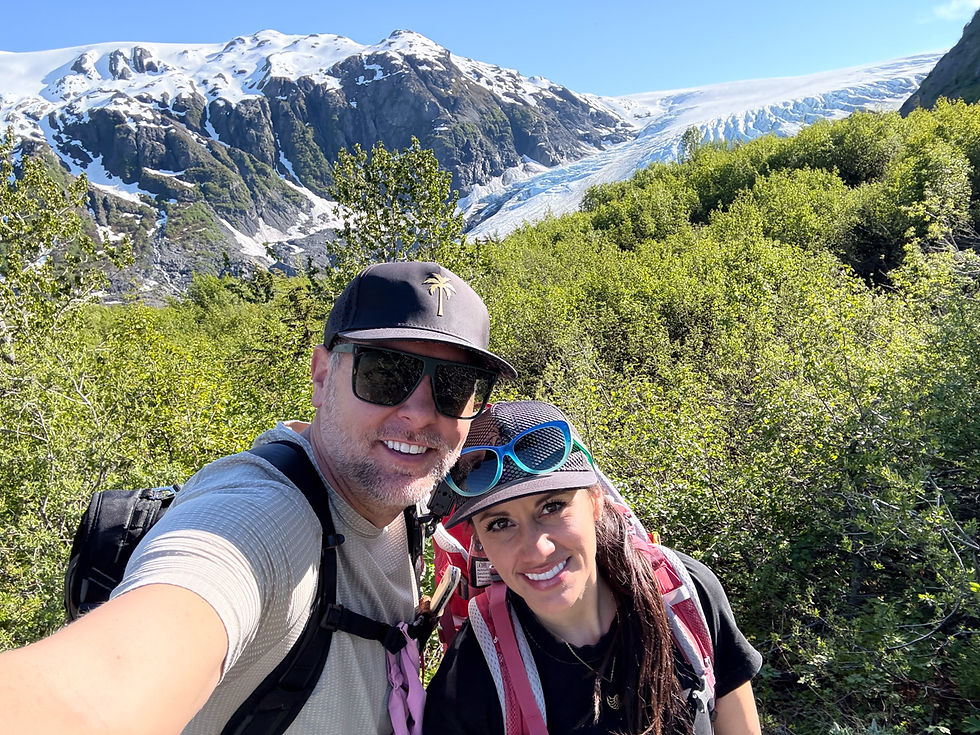
What Hiking Harding Icefield With Four Kids Was Really Like
Before we started hiking, my biggest question wasn't whether we could do Harding.
It was whether our kids could.
There's a difference between taking kids on a hike and dragging kids through a hike they stopped enjoying three hours ago.
We didn't want the latter.
One thing we've learned is how to manage kids on a trail and when they've reached their limit. You don't want to be 4 miles from the trailhead when they find that limit.. There are two things you MUST have if you are hiking with toddlers:
The first is the Deuter Kid Comfort Child Carrier
We also used to have the Osprey Child Carrier Backpack. It is just as awesome. The Deuter is better for me because I found it fit my smaller, 5'4" 125lb frame much better than the Osprey.
The straps and lumbar length are also completely adjustable.
For Chad, he's 6'4", he preferred the Osprey. It's meant for larger frames. It also has zippered pouches for stuff, where the Deuter has only the one with a drawstring closure, which I'm not a fan of. You can't beat the comfort though for the kids.
Now Ezra is almost too big for a child carrier. He is only 3 years old, but wears a 5T and weighs 50 lbs. His legs hang halfway down my legs, but it works for now. I think it's time to upgrade him to our 'Piggyback Carier.'
For Sloan, we use the Piggyback child stand up carrier. Sadly, they have gone out of business recently, but if you can find one, they are awesome!
Our kids packed and carried their own daypacks filled with a few essentials, but we made sure not to make them too heavy. We will get to that in a minute. (jump to list)
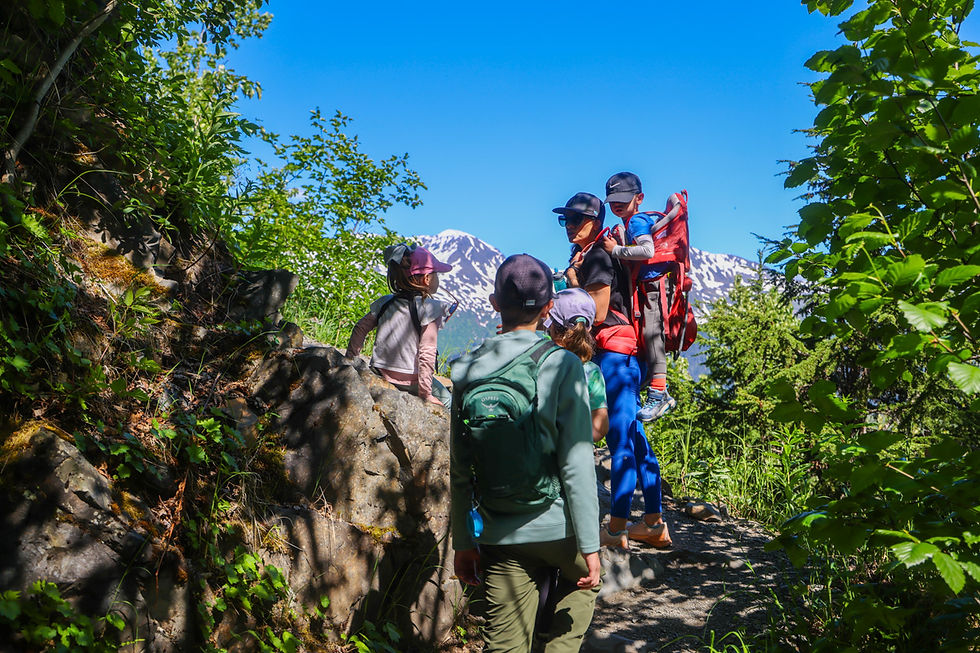
Then we started climbing.
And because I'm 'that mom' I almost immediately I started questioning everything I packed.
Did we bring enough water?
Too much?
Are these snacks going to attract a bear?
Wait.
The bears?!
Welcome to hiking with kids in Alaska.
Letting Kids Hike at Their Own Pace
One of the biggest reasons the day worked was that we didn't try to hike Harding at adult speed.
Kids notice things.

Lots of things.
A strange rock.
A bug.
A marmot.
A patch of snow.
A stick apparently important enough to transport half a mile uphill.
Instead of fighting that, we let the trail unfold at their pace.
We stopped for snacks.
We looked for wildlife.
We rested.
We let everyone catch their breath.
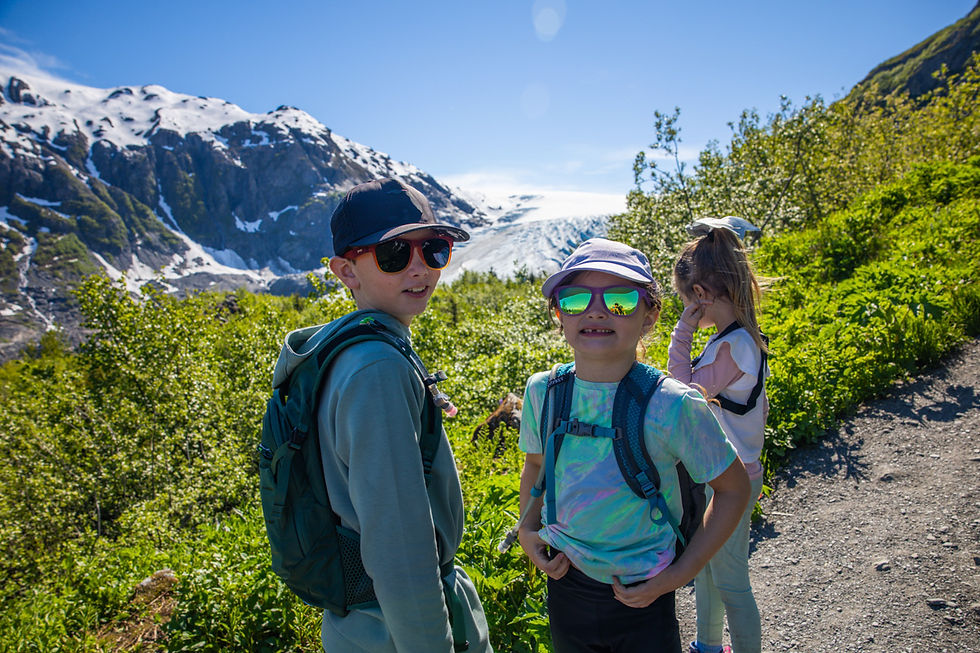
Then we kept climbing.
And the higher we went, the more determined the kids became.
That's one of my favorite things about hiking with children.
Sometimes they don't need the challenge removed.
They just need enough space to figure out that they can do it.

The Moment Exit Glacier Changes
There is a point during this hike when Exit Glacier stops looking like the glacier you saw from the visitor area.
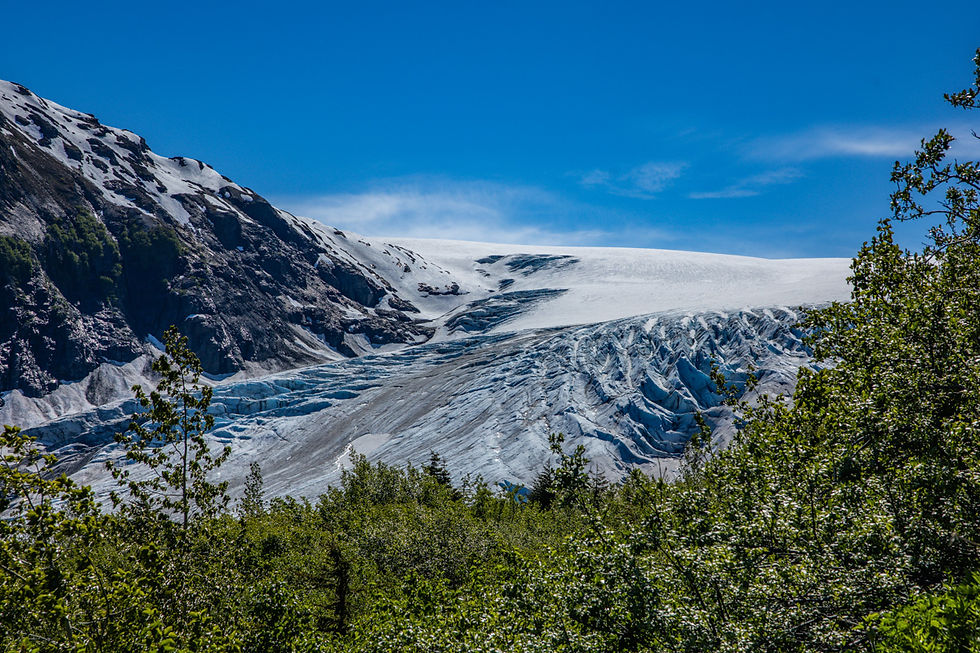
From below, you can explain what you're seeing.
You can tell your kids about blue glacier ice.
About crevasses.
About the enormous amount of ice beneath the visible surface.

About glaciers slowly moving and carving valleys through mountains.
But from above, something changes.
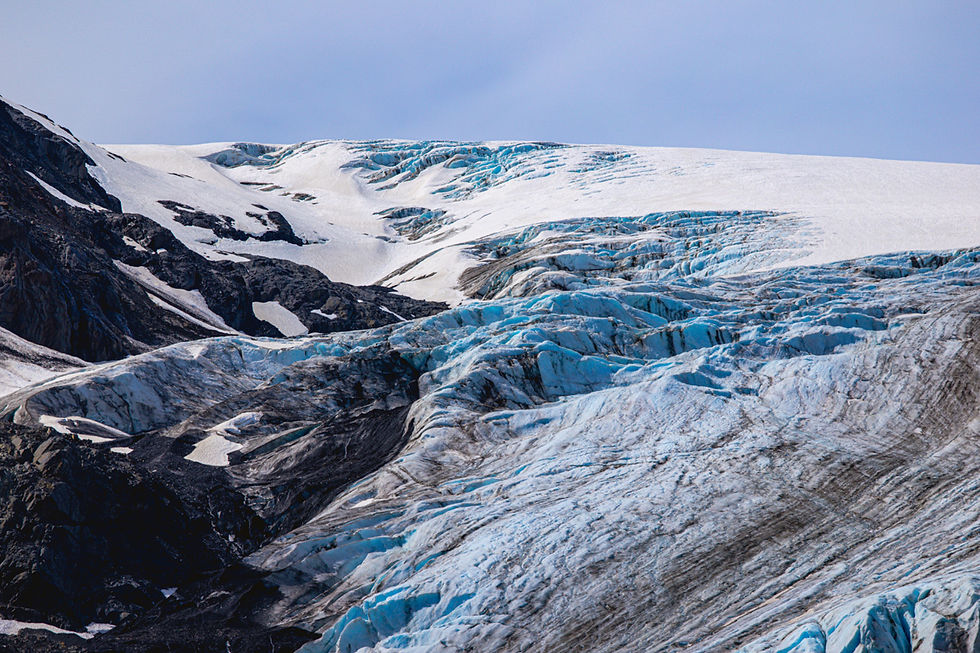
You begin seeing deeper into the ice.
The crevasses become more obvious.
The blue becomes more intense.
The patterns created by movement become visible.

And suddenly the scale makes sense in a way it simply didn't before.

We Didn't Finish the Harding Icefield Trail
And I don't regret it.

There is an interesting mentality surrounding hiking where reaching the official endpoint can become the entire definition of success.
The summit.
The marker.
The end of the trail.
But when you're hiking with four kids, that can become a terrible metric.
By the time we were just past Top of Cliffs, our kids had already accomplished something huge.
They had climbed thousands of vertical feet.
They had hiked through forest and alpine terrain.
They had pushed well beyond what we knew they were capable of doing.
And they were standing above Exit Glacier in Alaska.
Continuing another mile simply because the map showed another mile wasn't necessary.
So we turned around.
The trail went from fun to dangerous. Ezra had a little accident (Watch our YouTube video for all that drama) and we had to utilize the first aid kit on him. THEN A hiker fell right in front of us, cutting on her ice cleat. An active avelanche sign and a pair of bear prints did it for me. It was time to turn around.
Remember: The Hike Isn't Over at the Top
This may be one of the most important Harding Icefield Trail tips for families.
Your turnaround point, no matter where that is... is only halfway.

You still have to get everyone back down.
Descending thousands of feet after you've already been hiking for hours can be surprisingly difficult.
Kids get tired.
Adults get tired.
Feet start hurting. You may need to use some moleskin from the first aid kit.

And downhill hiking can be particularly hard on knees and legs.
When we decided to turn around, we weren't thinking only about whether the kids could hike farther uphill.
We were thinking about whether they could still hike all the way back down.
That is a much better question.
And Then There Was the Three-Year-Old
There is also one small detail worth mentioning.
We had a three-year-old.
Which meant that at some point during this adventure, our hike became a weighted training exercise.
A roughly 50-pound weighted training exercise for me.
Carrying a preschooler down a mountain after climbing more than 2,000 feet is an extremely efficient way to discover muscles you didn't know you had.
Would I recommend having a plan for carrying a younger child if you attempt Harding as a family?
Absolutely.
Even strong little hikers can hit a wall.
And Harding is a very long place to discover that your youngest child has decided walking is officially over. We let him walk when he wanted and I carried him when he didn't. But he 'did' every bit of that trail with us!

What to Pack for Harding Icefield Trail With Kids
Alaska weather can change quickly, and the upper portions of Harding Icefield Trail can feel dramatically different from the trailhead.
Our family hiking setup included the essentials we normally carry on longer Alaska hikes.
Our Essential Day Hike Packing List With Kids
Our kids packed and carried their own daypacks filled with a few essentials, but we made sure not to make them too heavy. Before I tell you what I put in it, let's talk about the bag. It has to be comfortable and lightweight. The pack we use for the three littles is the Osprey Daylite Jr. This bag fits my 3 year old, 5 year old, and 8 year old.
The Daylite Jr was a little small for Grayson, who is about to turn 11, so we went with a differnet bag for him. Gray has the Osprey Raptor Jr Boy's Mountain Bike Hydration Pack.
Both bags fit a 1.5L water reservoir. Chad and I both carry hand held water bottles, plus an estra 3L reservoir in one of our packs. Water is the most important thing in your bag. You don't want the littles wilting on the vine. We never make the 3 year old lug 1.5L on his back though. We fill his about halfway and carry extra in ours.
Now lets talk about the rest of the kids' daypacks:
Layers. Alaska and hiking really anywhere in the mountains is about layers. We have our kids wear light breathable layers and pants even if the weather looks warm. They tie a puffer around their waist and have gloves, a hat and in their daypack.
This hike started warm, but by the time we made Top of Cliffs, it was down right cold. We also pack waterproof frogg toggs in their packs.
Snacks It's important to pack the right stuff that will keep them going on long hikes: quick-burning carbohydrates for immediate energy, sustained protein and healthy fats to prevent meltdowns, and lightweight, mess-free options..
We pack a few things in all their packs that they can consume quickly and is packaged air tight so we don't have a bunch of walking bear snacks. Most important is probably carbs. They burn a lot of them working those little legs so hard. We like Z-Bars, Bobos Oat Bars, and Kind Nut Bars. They don't crumble or melt. We also love Archer sausage stick minis for a protein, and for sugar to keep them going, we pack gummy bears, apple sauce or Noka pouches, dried fruit or fruit leather. Our Freya also has a tendency towards low blood sugar so I pack glucose tablets in my bag, just in case she starts to wilt. Feed them a substantial carb packed meal before the hike, so they start with a full belly.
Emergency Stuff. Even though they are young, and I never intend on them having to actually use any of it, my three older kids: 10, 8, and 5 all have a few emergency items in their bags. Just in case. Because you never know.
The parent or adult carries the bulk of the safety and survival gear. In Alaska, we actually had to use several of the items. It was some of the scariest moments of my life 😱, that's a story for another post, but I was SO happy I pack these things:
Emergency Blanket
Waterproof fire starter of some kind (Grayson has stormproof matches and a lighter, Freya has a lighter)
Signal Mirror
Shrill whistle (teach them the 3-blast distress signal)
Small compass
Multi-use survival tool (and make sure they know how to use it)
Mini Flashlight
Bear Horn for the 10 yr old and a Bear Bell for the younger ones.
You can find all of it here on our Amazon storefront.
Adult Day Packs:
As parents, we carry the extras for the littles.
As they get older, we give them more responsibility, but for us right now, it's about making them fall in love with hiking and pushing them a little further each time.
We carry: All the stuff the kids have, plus:
First-aid supplies
Plenty of water
Electrolyte tablets or powder
High-calorie snacks
Lunch
Bug spray
Rain jackets
Warm layers
Sturdy hiking shoes or boots
Sunscreen
Sunglasses
First-aid supplies
Glucose tabs
Water filtration tabs in case we run out (or it seems fun to purify stream water that day)
Bear spray
Offline trail navigation
Trekking poles
Extra socks
Lightweight gloves and hats when conditions warrant them
Larger emergency blanket
And of course, bribery. Yes. I said it. We do carry a ziplock of mini chocolates for celebration at the end of a hike, but we've been known to use them to perk the wilting hikers up.
The National Park Service recommends hikers carry at least two liters of water per person or bring an appropriate method of treating water. There is no potable water along the trail.
Conditions can also include mud, rain, snow, wind and rapid temperature changes. Just the difference between the sun and shade is jolting.
Pack for the mountain — not simply for whatever the weather feels like at the parking lot.
Bear Safety on Harding Icefield Trail
This is Alaska.
Harding Icefield Trail passes through bear habitat, including dense vegetation and salmonberry areas.
Black bears are regularly seen along the trail.
We carried bear spray and stayed aware of our surroundings throughout the hike.
When hiking with kids, we also try to keep everyone reasonably close together rather than allowing the group to spread far down the trail. We have an adult in front and one behind the group.
Make noise. Our favorite chant is "Hey Bear" clap clap, then the family copies whoever started the chant.
Pay attention around thick vegetation.
Know how to respond if you encounter a bear. (it depends on the bear, the time of year, and the bear's behavior. That's a lot to think about if suddenly you happen on one)
And never allow kids to run toward wildlife for a closer look.
The wildlife is one of the reasons Alaska is incredible.
It is also wildlife.
Treat it that way.
When Is the Best Time to Hike Harding Icefield Trail?
Harding Icefield Trail is generally considered a summer and early fall hike, but conditions vary dramatically from year to year.
Snow can remain on upper portions of the trail into early summer, and avalanche hazards can exist in late spring and early summer.
Fall can bring new snow surprisingly quickly.
This is one trail where I would always check the current Kenai Fjords National Park trail conditions before leaving Seward.
Do not assume conditions at sea level tell you what is happening several thousand feet higher on the mountain.
How Long Should You Plan for Harding Icefield Trail?
For the full hike, the National Park Service recommends allowing approximately 6–8 hours.
With kids, I would build in more flexibility rather than trying to beat a particular hiking time.
Give yourself the day.
Start early.
Stop for lunch.
Let the kids investigate things.
Take the photos.
Watch the marmots.
Stand there for a minute when the glacier finally opens up beneath you.
The entire reason we bring our kids into places like this is so they can experience them.
Not so we can rush them toward a waypoint on a GPS screen.
Is Harding Icefield Trail Worth It If You Don't Reach the End?
Absolutely.
In fact, this may be the biggest thing I want families to know about hiking Harding Icefield Trail.
You do not need to finish it for it to be amazing.
If your family reaches Marmot Meadows and everyone feels accomplished?
Turn around.
If you reach Top of Cliffs and your kids are tired?
That is an extraordinary hike.
If you make it all the way to Harding Icefield?
Amazing.
This trail doesn't have to be all or nothing.
Some of the best views appear long before the endpoint.
And when you're hiking with kids, having several possible "wins" along the route makes the entire experience better.
Whatever your hiking goals are, I hope I've inspired you to get out there with your kiddos and do the darn thing.
Harding Icefield Trail With Kids: Frequently Asked Questions
How long is the Harding Icefield Trail?
The Harding Icefield Trail is approximately 7.8 miles round trip from the official trail register to the end of the trail and back, but from the parking lot.. more like 9.
How much elevation does Harding Icefield Trail gain?
The official National Park Service trail map lists approximately 3,102 feet of vertical rise from the Harding Icefield Trail register to the end of the trail. More like 3,300 from the Nature Center.
How long does it take to hike Harding Icefield Trail?
The National Park Service recommends allowing approximately 6–8 hours for the full hike. Families with children may need longer depending on pace, breaks and trail conditions.
Can kids hike Harding Icefield Trail?
Experienced hiking kids may be able to hike part or all of Harding Icefield Trail, but it is a strenuous mountain hike. Families can turn around at Glacier Overlook, Marmot Meadows, Top of Cliffs or anywhere else that makes sense for their children. You can even choose the easy .5 mile Glacier View walk.
How far is Marmot Meadows?
Marmot Meadows is approximately 1.5 miles one way from the Harding Icefield Trail register.
How far is Top of Cliffs?
Top of Cliffs is approximately 2.3 miles one way from the Harding Icefield Trail register.
Do you have to hike the whole Harding Icefield Trail?
No. Harding Icefield Trail is an out-and-back hike, and there are excellent views well before the end of the trail.
Are there bears on Harding Icefield Trail?
Yes. A lot of them. Daily. Harding Icefield Trail is bear country, and black bears are frequently seen in the area. Hikers should know appropriate bear-safety practices and remain alert, particularly around dense vegetation. We saw plenty of scat, but no bear thank goodness.
Is there cell service on Harding Icefield Trail?
Do not rely on it. Kenai Fjords National Park states that there is no cell phone service or public Wi-Fi in the Exit Glacier Area. We lost signal right after the trail register.
Watch Our Harding Icefield Adventure

Want to see what hiking the Harding Icefield Trail with four kids actually looked like?
Watch the full adventure on our YouTube channel, where we share the climb, the views, the hard parts and what actually happened when our family tackled one of Seward's most iconic hikes.
Follow WanderLuxe With Us on Instagram and Facebook for bite-sized adventures, live updates from the road and the places we think are actually worth adding to your own trip.
And for the less-polished version of full-time travel as a family of six, you'll find the unscripted adventures on TikTok.
Join the Journey.


Comments